
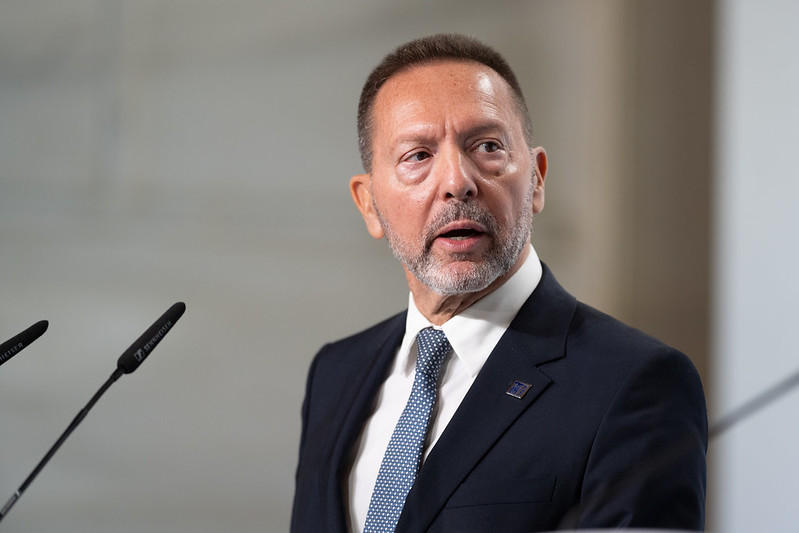
By David Barwick – FRANKFURT (Econostream) – European Central Bank Governing Council member Yannis Stournaras on Thursday warned that a prolonged war in the Middle East would have stagflationary consequences for the euro area, saying it would mean “higher inflation and lower growth.”
Stournaras, who heads the Bank of Greece, said in a speech at an event of the American Hellenic Educational Progressive Association in Frankfurt that the external environment remained “very fragile,” citing geopolitical instability, protectionist pressures, economic policy uncertainty, financial fragmentation and climate change as downside risks.
The military escalation in the Middle East constituted “an additional adverse supply shock for the global and the euro area economy,” with potentially large macroeconomic effects if the conflict persisted or spread, he said.
“The war, if sustained, is bound to produce stagflationary effects,” he said. He also said periods of conflict tended to bring budget strain, energy disruption and wider uncertainty, making sound fiscal governance and coordinated crisis management especially important.
Most of the speech was devoted to Greece’s debt crisis, the adjustment programs and the country’s subsequent recovery rather than to the ECB’s immediate monetary policy outlook.
Still, Stournaras argued that one lesson of the Greek crisis was that “the stance of fiscal policy needs to be consistent with that of monetary policy,” while also renewing his support for more joint European borrowing for common purposes such as defense, green energy and strategic investment.