
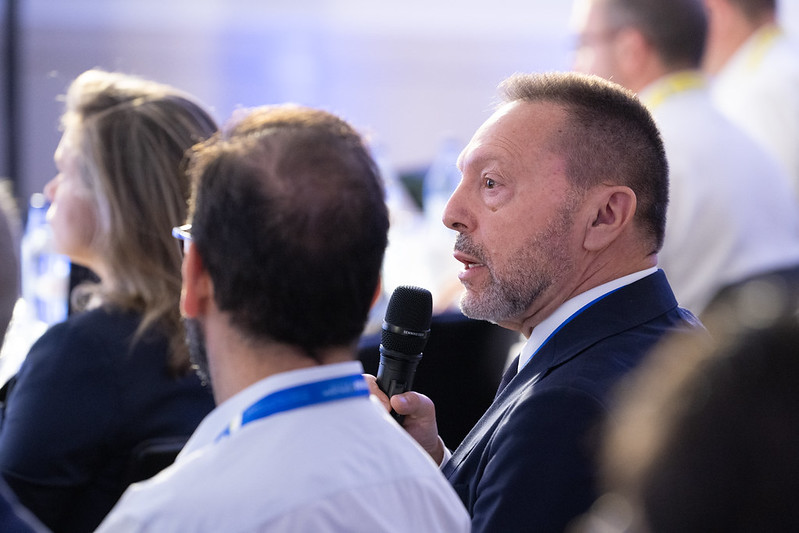
By David Barwick – FRANKFURT (Econostream) – European Central Bank Governing Council member Yannis Stournaras on Thursday said the latest Middle East conflict had created another supply-side shock that was pushing up inflation and weighing on economic activity, arguing that Europe needed more investment to strengthen its resilience.
Speaking at a conference on the European Union’s Savings and Investments Union (SIU), Stournaras said the geopolitical turbulence had disrupted energy supply chains and generated "significant upward pressures on global inflation and downward pressures on economic activity."
Stournaras, who heads the Bank of Greece, said the impact was more severe for the Eurozone because it is a net energy importer.
"As shown in high-frequency indicators for expected inflation and real yields, the impact of these adverse geopolitical developments is more severe for the euro area economy," he said.
According to Stournaras, recurring energy-related supply shocks underscored the need for investment aimed at reducing Europe's dependence on imported energy and upgrading production technologies.
To help close Europe's investment gap, he endorsed efforts to develop the EU's Savings and Investments Union, arguing that Europe had sufficient savings but was not channeling enough of them into productive domestic investment.
He also reiterated support for deeper financial integration, including completion of the Banking Union through the establishment of a European Deposit Insurance Scheme (EDIS).
"Europe should deepen financial integration and turn the current uncertainty into an opportunity for a more competitive, more productive, more innovative and more attractive European economy," he said.