
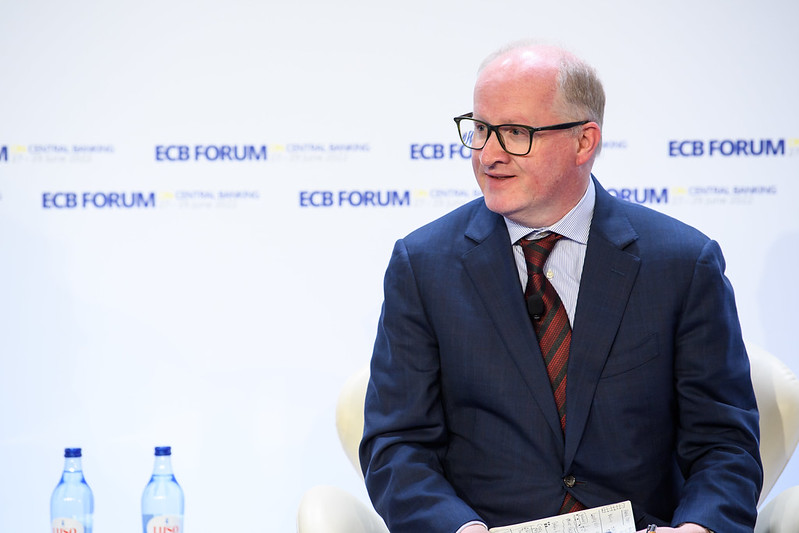
By Marta Vilar – MADRID (Econostream) – European Central Bank Chief Economist Philip Lane said on Tuesday that the ECB raised interest rates in June because failing to respond to the energy shock risked allowing it to evolve into a broader and more persistent inflation problem, adding that policymakers remained mindful of the negative effects of higher prices on economic activity.
Speaking before the European Parliament’s Committee on Economic and Monetary Affairs, Lane said the ECB had refrained from reacting immediately after the outbreak of the conflict in February but had acted in June as concerns grew that the energy shock could feed into broader inflation.
He said the ECB expected food prices to rise, while categories such as transport services and tourism had already experienced price increases.
“So, what tends to happen is that that cost increase percolates across the economy,” he said. “And then, with the overall cost of living going up, then it's going to be a factor in the next round of wage negotiations.”
The ECB wanted to contain these broader inflationary pressures, he said, noting that while the initial trigger was external, inflation could become persistent without a monetary policy response.
Lane said the ECB calibrated policy with a medium-term perspective, taking into account both the inflation outlook and the negative impact of higher energy prices.
“[I]f we don't respond, there's a risk that the initial trigger of the energy shock mutates into an inflation problem which, if we don't address it early, could persist for a long time and generate significant economic costs, particularly for lower-income households,” he said.
Related articles: