
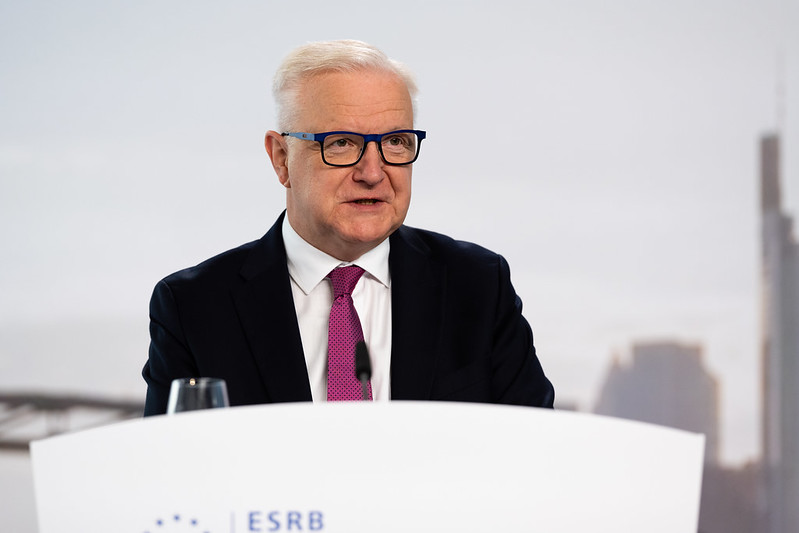
By David Barwick – FRANKFURT (Econostream) – European Central Bank Governing Council member Olli Rehn said Tuesday that rising long-term interest rates were slowing growth and reducing the pass-through of higher energy prices into other prices and wages, while stressing that heightened uncertainty justified retaining a meeting-by-meeting approach to interest rates.
The Bank of Finland governor said at a press conference in Helsinki that inflation had so far not spread significantly beyond energy, but he warned that the longer the Middle East conflict continued, the greater the risk that higher energy costs would affect other prices and wages.
“So far, we have not seen inflation spread to non-energy prices or wages,” Rehn said. “But we have to be vigilant, as such effects can creep in unnoticed.”
“The longer the Middle East conflict continues, the bigger the risk that the rise in energy prices will broaden out,” he added.
Rehn’s presentation showed euro area inflation remaining clearly above the ECB’s 2% target, driven largely by goods directly or indirectly linked to energy, while wage growth remained moderate and second-round effects had so far not materialized. He also said upside risks to inflation had increased recently.
At the same time, Rehn emphasized the countervailing effect of the recent increase in longer-term borrowing costs.
“The rise in long-term interest rates is contributing to a slowdown in growth and also to a reduction in the pass-through of energy prices to other prices and to wages,” he said.
The euro area economy had proved resilient and performed somewhat better than expected recently, Rehn said, helped by defense and infrastructure investment, improving consumer confidence and investment and exports associated with artificial intelligence. Growth nevertheless remained subdued and risks to the outlook were tilted to the downside, according to his presentation.
Rehn said the full inflationary consequences of the energy shock had yet to emerge, even though its transmission into other prices had thus far been smaller than feared and there were currently no signs of second-round effects.
Against that backdrop, he said the ECB should avoid giving advance guidance about future rate decisions.
“Given the current environment of heightened uncertainty, there is very good reason why the ECB is not pre-committing to a particular interest rate path but is following a meeting-by-meeting approach to its interest rate decisions and using incoming data and other information,” Rehn said.
Rehn said the prolonged Middle East conflict could have more lasting consequences for energy markets, with geopolitical and political factors potentially keeping Middle Eastern oil and gas prices and refining margins higher for longer. Adjustment through alternative routes, suppliers and infrastructure would therefore matter, he said.
He described the Middle East conflict and rapid AI investment as two opposing forces affecting the global economy, with the former weighing on activity while the latter supported investment and growth.
However, elevated valuations of AI companies and increased leverage also raised the risk of a market correction, Rehn said. The strong demand for capital generated by the AI investment boom had itself contributed to higher long-term global interest rates, alongside inflation expectations, growing public debt and higher term premia associated with increased uncertainty.
Rehn also called for government debt to be placed on a sustainable trajectory to preserve fiscal room for investment in new technologies and defense.